Super Cool AI Bro
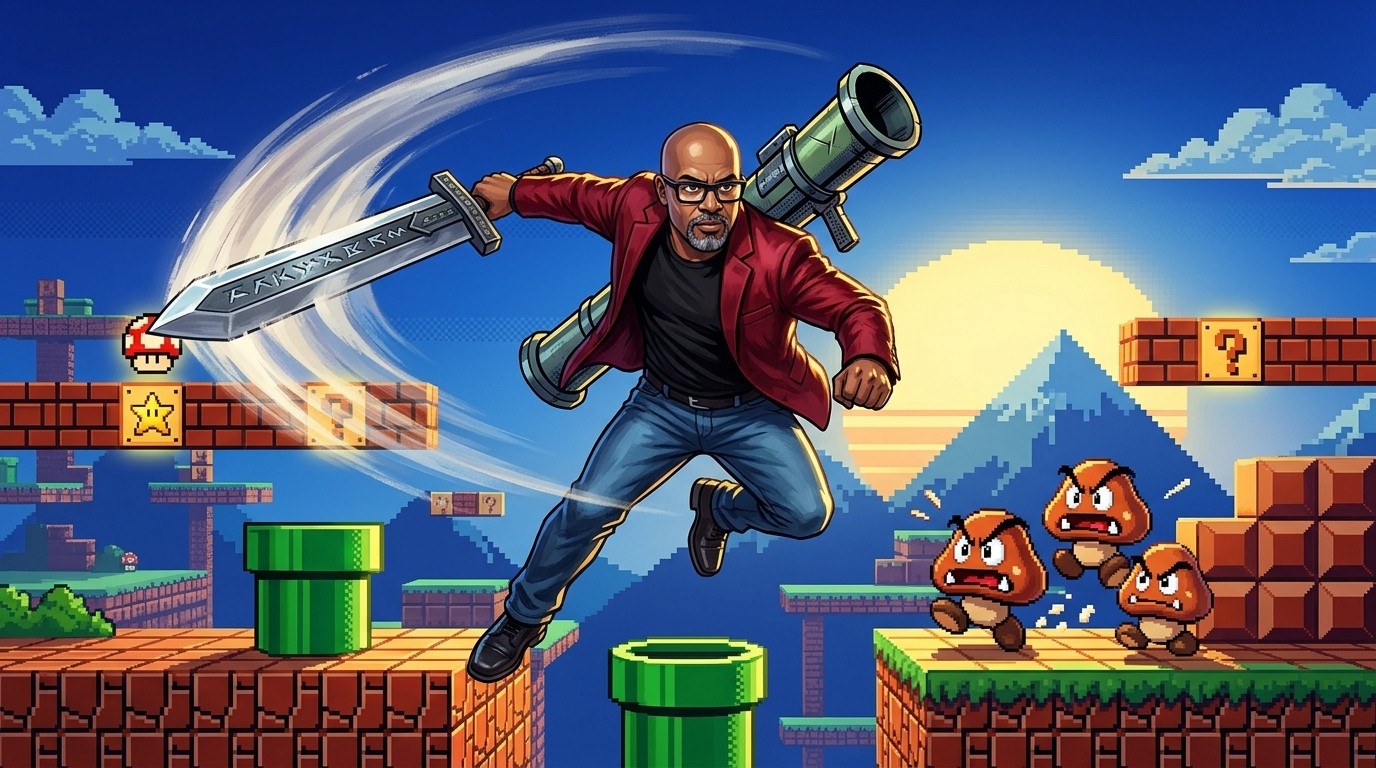
Run, jump, and explore a platforming world that switches between retro pixels and an AI reimagining. Play online or save it offline.
Play the game ↗ patrickz.aiLet’s talk ↗
PROJECTS THAT BECAME LESSONS
Start with a small working slice of a real project. Most labs use a coding agent; 5 can start with a chat assistant or a spreadsheet. Each one gives you a boundary and a test.
First time building? Begin with a small app ↗Play the games · Labs · Warm-up builds · The stories behind the builds

THE AI GAME MUSEUM
Explore a platform adventure, a dungeon quest, a Bangkok comic, or a classic dungeon crawl. Each game has its own page with browser controls and an option to save it for offline play.
Run, jump, and explore a platforming world that switches between retro pixels and an AI reimagining. Play online or save it offline.
Play the game ↗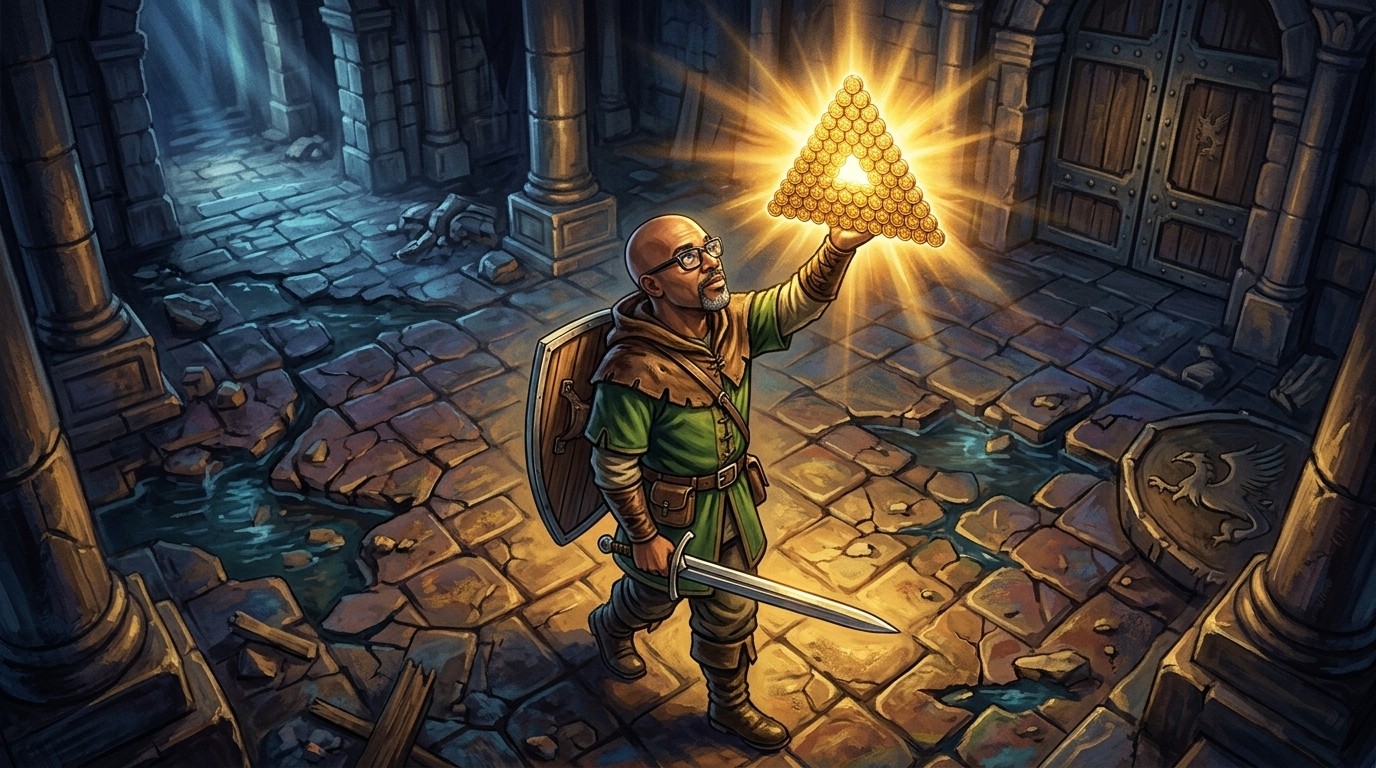
Explore an overhead adventure, uncover secrets, and take a sword into a world that spans two visual eras. Play online or save it offline.
Play the game ↗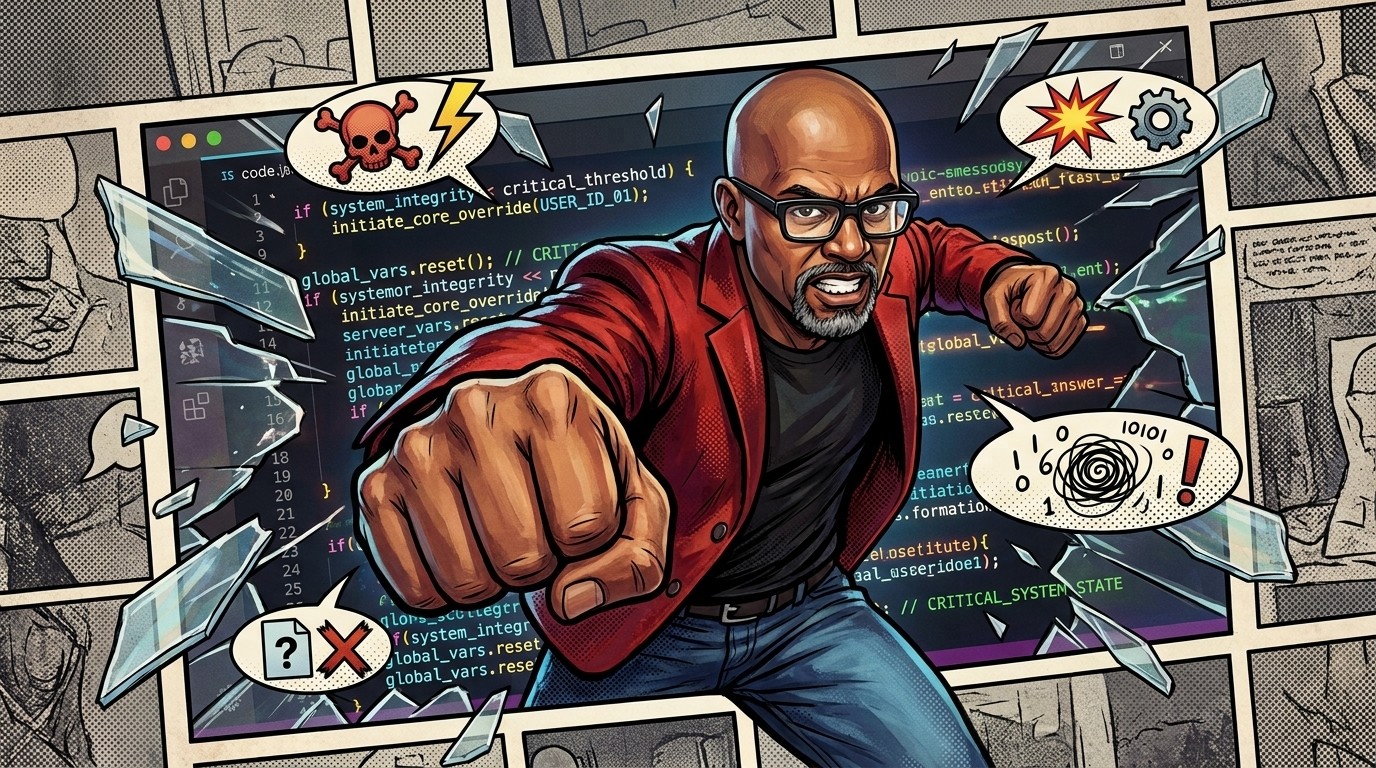
Step into a playable comic with Patrick and Su: street fights, Thai phrases, and a Bangkok adventure that keeps turning the page.
Play the game ↗
Choose your adventurer, enter a Norse fantasy dungeon, and find your own way through a turn-based world of monsters, spells, and treasure.
Play the game ↗Open the game collection ↗ · Read how the museum came together ↗
Use public code as a reference, or build the practice version in a new project. Keep sample data fictional. 7 have a live version you can open first.
Game labs (7) · App labs (4) · Website labs (3) · Automation, media and work (3)
Produce an implementation plan with a testable first milestone.
Build a focused viewer that makes a visual bug reproducible.
Separate public room state from private player information.
Finish a one-room game with save, reload and a deliberate offline test.
Make one playable language encounter with a text fallback.
Make movement, one attack and restart work across keyboard and touch.
Finish a small match with deterministic scoring and restart.
Create a Today view with a persistent task and a useful evening review.
Retire connectivity uncertainty before adding an AI feature.
Save, export and restore a small set of local records.
Design and test one create-and-list flow with a server-side user boundary.
Create a mobile-friendly event page with one verified booking route.
Publish two readable posts with a dependable index and safe rendering.
Create a service page whose claims, scope and contact path are clear.
Create a small library of reviewed prompts people can search, copy and check against a rubric.
Normalize and compare listings without silently inventing missing facts.
Create a file-based shot register with versions, references and review status.
Shorter guided builds if you have not coded with AI before.
Create and test one complete local interaction before choosing a production stack.
Build a small playable loop and use playtesting to control scope.
Define and test a small accessible tool with an ordinary-device fallback.
BEHIND THE BUILDS

Learn to tell an AI coding agent what “done” looks like before it builds, then ship a small app in thin slices you can prove actually work.
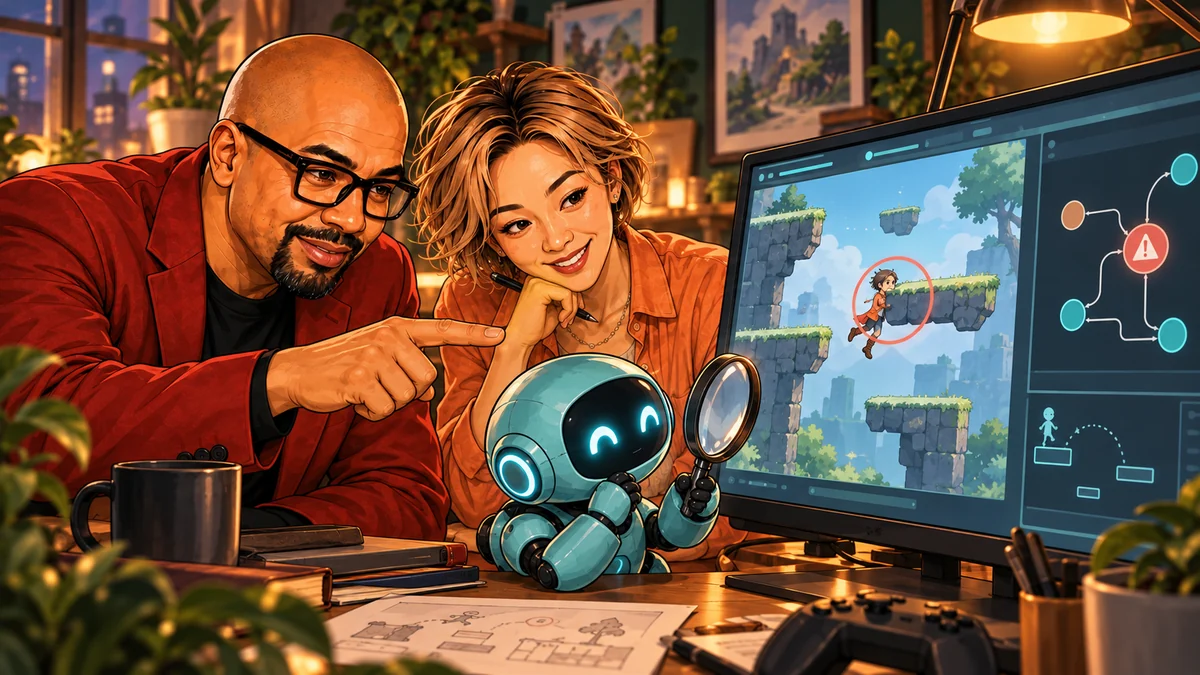
Learn six steps for finding out why something broke (a game, a spreadsheet, a prompt) so the AI works from evidence, not guesses.

Space wizards. Expiring credits. A production workflow that became almost as interesting as the film.
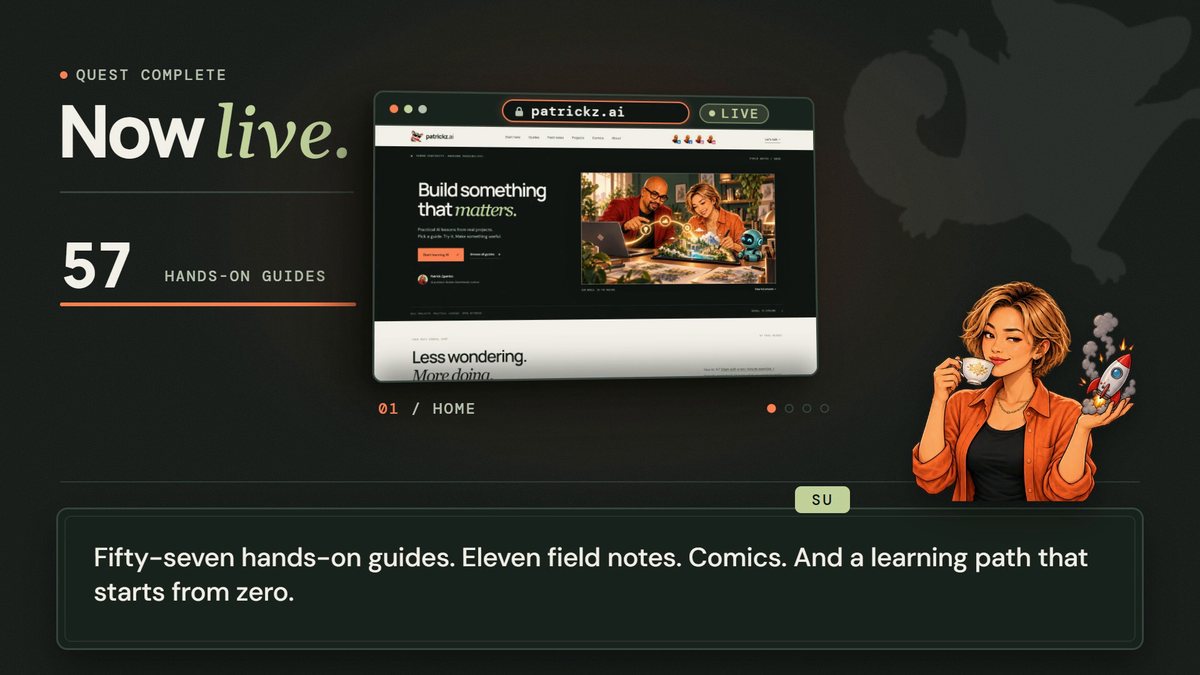
One hundred and four posts, two years of ideas and zero websites. Here is the exact workflow, the prompts and the guardrails that turned them into patrickz.ai, plus the instructional video I made about it.
A request to train 20 new team members became a practical test of GPT-6: could the workflow I used for anime music videos make useful training material while I slept?
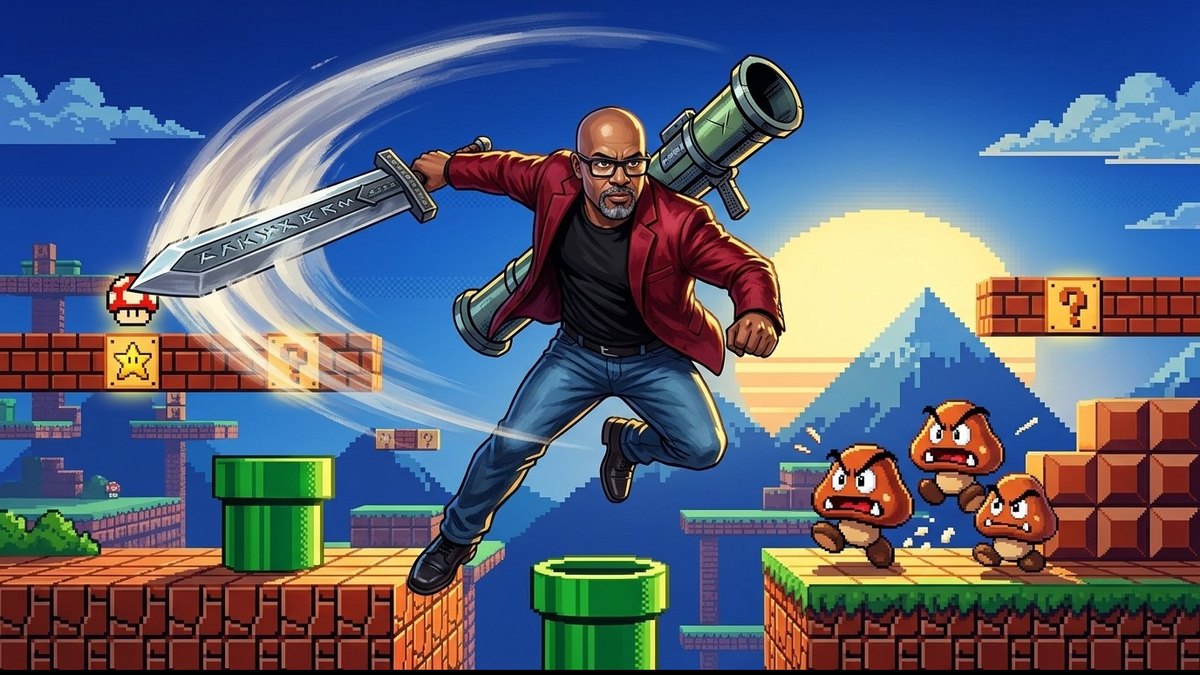
In one day, parallel AI agents rebuilt Super Mario Bros. and The Legend of Zelda starring me, upscaled and over the top, playable on my phone. The real lesson was how to direct agents and let a bot judge their work.

Learn to start an AI project from one person's real needs, pick the easiest input that works for them, keep a non-AI fallback, and measure what matters to them.